
Geography, Travel & Trade
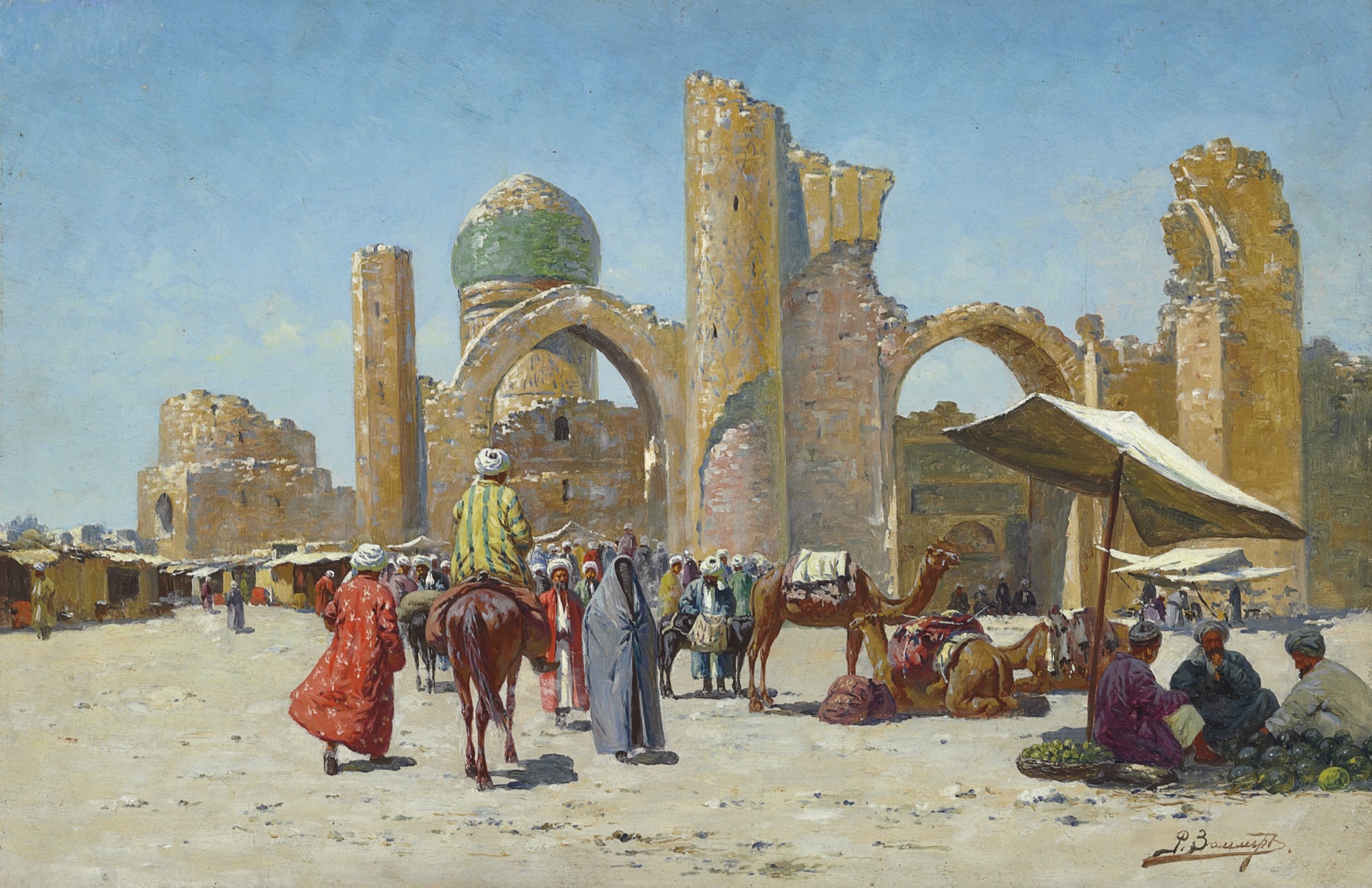
This collection of teaching resources highlights historical connections between the Middle East and the wider world, including the region’s role in global exchange—from the travels of Ibn Battuta and Mansa Musa to the Indian Ocean cotton trade and the incense routes of the Arabian Peninsula. Materials include lesson plans and teaching units designed for middle and high school classrooms.
Tapestry of Travel
Teaching Module
This module, written by Karima Alavi for CCAS, provides an introduction to the contributions of Arab and Muslim civilizations to geography and world exploration, and introduces students to early travelers including Ibn Battuta, Hasan al-Wazzan, Mansa Musa, and multiple others. Click here for the PDF.
Cotton in the Global Economy: Mapping Material Culture Through Indian Ocean Trade
Teaching Unit
This teaching unit explores Indian Ocean trade through the rise of cotton as a global commodity. It foregrounds the antecedents of Europe’s cotton industry and their contributions to industrialization. This lesson plan was developed by Kayle Steck for the CCAS teacher workshop Mapping Material Culture through Indian Ocean Trade: Cotton in the Global Economy Over Time and Today, which invited teachers to enrich units on economic history by exploring cotton textiles and their long global history. It is designed for students in 7th-12th grade and emphasizes tangible, familiar materials to help students connect economic history to their own experiences and reconsider the Industrial Revolution as both disruptive and deeply rooted in an ancient global industry. Click here for the teaching unit.
Beyond Ibn Battuta–The Indian Ocean Across Time and Disciplines
Video Series
The Summer Teacher Institute 2015 explored the Indian Ocean as a vibrant region of exchange and innovation in production of goods and technological advancement. The trade circuits of Afroeurasia were linked to global routes crossing the Atlantic and the Pacific, including those in Southeast Asia, Southwest Asia, South Asia, and East Africa. Today, the Indian Ocean is a microcosm of the globalized economy. Indian Ocean maritime trade in fossil fuels, minerals, tropical raw materials and commodities, as well as finished goods, are produced and transported through the Indian Ocean. About half of the world’s trade passes through crucial straits in Indian Ocean, joining the Pacific and Atlantic worlds as well as land-based economic activities in China, Southeast Asia, India, Africa and the Arabian Peninsula. The emergence of China and India as economic giants in the current century means intensification of activity in the region. STI 2015 aimed to expand attendees’ understanding of the global importance of the Indian Ocean beyond the distant past through interdisciplinary programming.
Click here to watch recorded lectures from STI 2015.
Geography of the Arabian Peninsula
Lesson Plan
This lesson, written by Joan Brodsky Schur for CCAS, introduces students to the physical geography of the Arabian Peninsula during the premodern era, its position relative to bodies of land and water, its climate, and its resources. Click here for the PDF.
The Incense Routes: Frankincense and Myrrh: As Good As Gold
Lesson Plan
This lesson, written by Joan Brodsky Schur for CCAS, on the trade of aromatic resins focuses on the origin of frankincense and myrrh in the Arabian Peninsula and the ways that demand for these aromatics integrated the peninsula into the trade routes of Eurasia. Click here for the PDF.
Oman in Indian Ocean Navigation and Trade
Lesson plan
This lesson plan highlights the geographic features, navigational and sailing technologies, key locations, and major products that shaped Oman and its corner of the Arabian Peninsula over millennia and across the Indian Ocean in various eras of world history. It includes handouts, proposed activities, and possible lesson extensions that can be adapted for upper elementary through high school students. It was developed by Dr. Susan Douglass for the Teacher Workshop and Exhibit Tour From Sinbad to the Shabab Oman: A Seafaring Legacy, a collaboration between CCAS and the Sultan Qaboos Cultural Center (SQCC). The workshop explored the region’s seafaring legacy of trade and travel across the Indian Ocean and the Mediterranean, situating it within the broader history of the Middle East, North Africa, and the world. Participants heard from speakers Dr. Allen Fromherz (Georgia State University) and Dr. Susan Douglass (Georgetown University), and received a guided tour of the exhibit From Sinbad to the Shabab Oman: A Seafaring Legacy led by Dr. Harrison Guthorn (SQCC). The workshop was co-sponsored by CCAS and SQCC and supported by CCAS through a Title VI grant from the U.S. Department of Education. Click here for the lesson plan and resources.