Summer Teacher Institute 2025: Approaches to Teaching the Three Empires in the First Global Era (Virtual & In-Person)
Dates: June 23-June 27, 2025
Venue: Georgetown University, Bunn Intercultural Center (ICC) #141 and online Zoom link to come for virtual attendees.
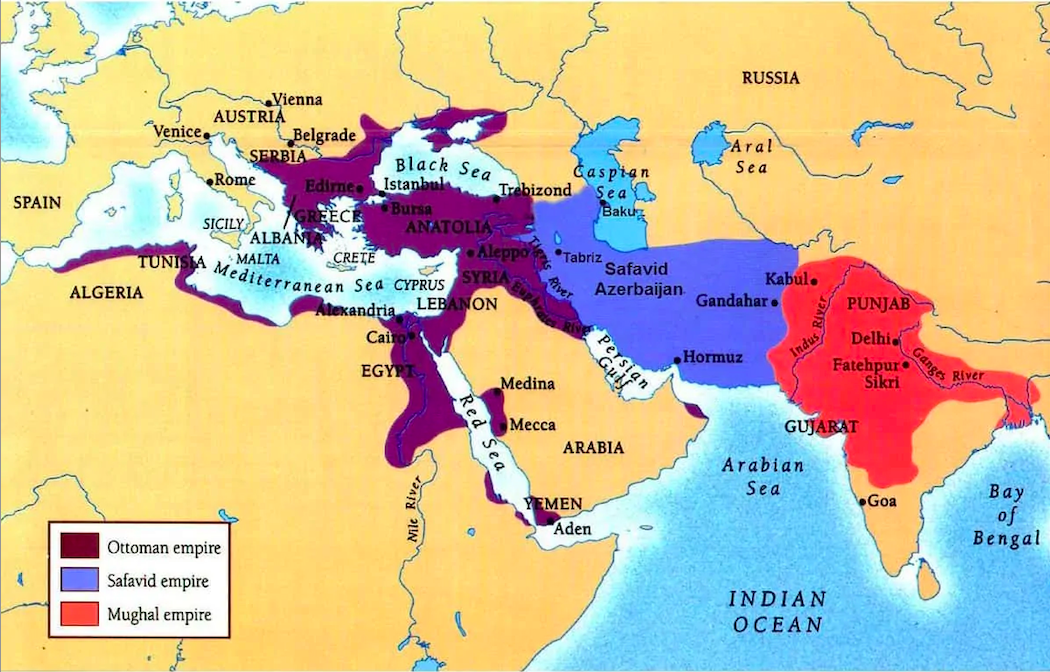
There are many complexities and contradictions in teaching about the First Global Era from 1450 to 1750. The Mughal, Safavid, and Ottoman Empires arose alongside the overall expansion of Islam into new Asian and African regions. These empires arose in the post-Mongol era of Tamerlane, and their expansion mirrors the process of conquest of the military patronage states of that period. As “gunpowder empires,” they owed their conquests to the weapons of mass destruction of that age–cannons, artillery, and hand-held firearms. Then there is the problem of their military conquests, and subsequent patronage of arts, science, engineering, and Islamic institutions. Indeed, these three empires’ patronage and style brought forth new heights in the Islamic arts and architecture. A pedagogical problem in teaching about them is historical hindsight. Comparing the splendor of royal portraits, magnificent courts, and artistic outpouring of these empires beside the same portraits and courtly magnificence of rising European nations, the former are seen as decadent, and the latter as dynamic, creative and in ascendance. The eruption of European nations into the oceans, and their efforts to exert universal sovereignty overshadows the role of the three empires on the global stage. Alongside the new worlds of human society and civilization that Europeans encountered in their travels, their experience of the Mughal, Safavid and Ottoman Empires contributed to three major movements in the First Global Era–the Scientific Revolution, the Protestant Reformation, and the Enlightenment–through exchange and exposure to new social and commercial environments. This summer institute explores these historical conundrums and the ways in which cross-cultural and inter-cultural exchanges enriched global civilization and investigates the evidence for commercial, religious, artistic and intellectual influences that flowed in all directions. Finally we will seek understanding of how these interactions set the tone for the period of the industrial and imperial eras, and had lasting influence since then. Lunch will be served daily. A museum trip to the Smithsonian Museum of Asian Art is planned.
Register here