
CCAS at 50: A Living Legacy
This academic year marks the 50th anniversary of the Center for Contemporary Arab Studies, which was founded at Georgetown’s School of Foreign Service in 1975.
By Vicki Valosik*
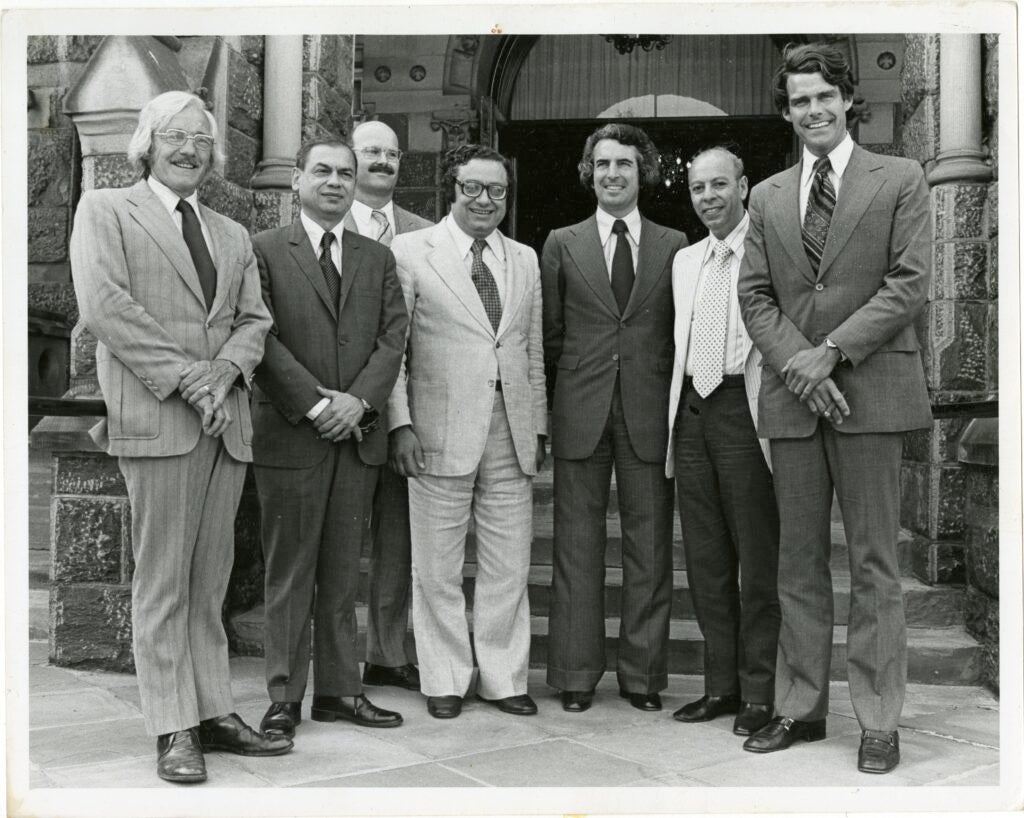
1975 – CCAS IS FOUNDED
Several of CCAS’ key founders, left to right: John Ruedy, Hisham Sharabi, Michael Hudson, Clovis Maksoud, Sharif Guellal, Ibrahim Oweiss, and SFS Dean Peter Krogh
Half a century ago, a group of Middle East scholars based in Washington, DC identified a need for greater and more sustained attention to the Arab world in American higher education. The region was becoming increasingly central to U.S. foreign policy and global economic debates, yet few universities offered robust programs focused on the modern Middle East. They believed that Georgetown—with its location in the nation’s capital and as home to a robust Arabic department and the country’s largest and oldest school of international relations—was the ideal place to launch such a project. With support from University leadership—particularly Dean Peter Krogh of the School of Foreign Service, where the new center was to be housed—they began outlining their plans in the early 1970s with a stated goal to “develop the best program of studies on the modern Arab world to be found in the United States.” Just a few years later, on September 3, 1975, the Center for Contemporary Arab Studies was inaugurated by Georgetown President R.J. Henle. The ceremony, which featured remarks by government representatives from the United Arab Emirates, Oman, and Egypt, was attended by a wide range of faculty, Washington community leaders, and dignitaries from the Arab world.
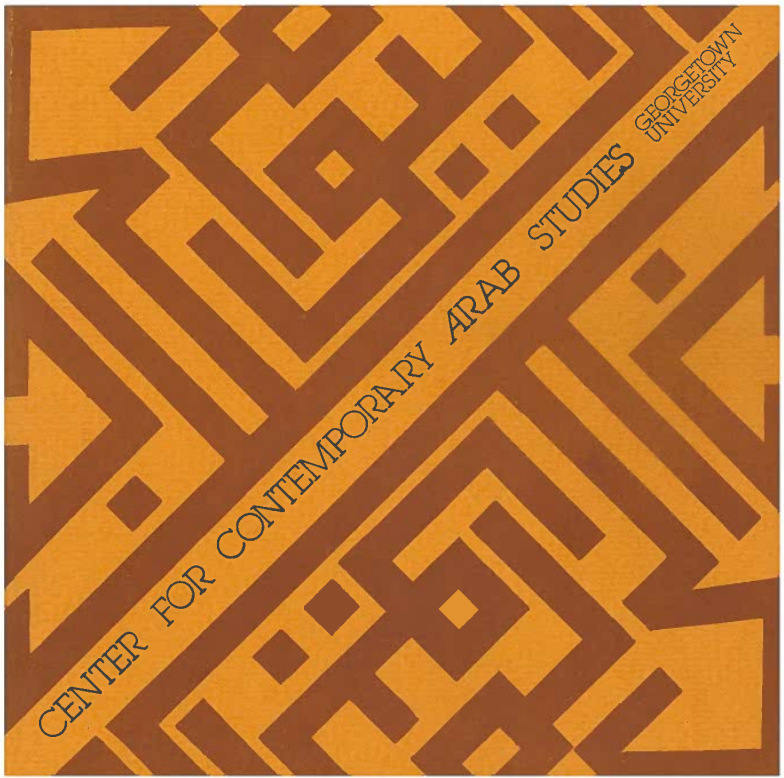
1975 – KAMAL BOULLATA CREATES CCAS LOGO
A 1975 prospectus outlining plans for the new Arab studies center at Georgetown and featuring the logo designed by Kamal Boullata
From the outset, CCAS’s early leaders—including Michael Hudson, Marmaduke Gresham Bayne, Ashraf Ghorbal, Wallace Irwin, David E. Long, Clovis Maksoud, Ibrahim Oweiss, John Reudy, Irfan Shahid, Hisham Sharabi, Barbara Stowasser, and Peter Krogh—envisioned a center with a clear public purpose. They aimed to equip academics, diplomats, policy makers, and business professionals with the knowledge and skills to understand the complexities of the contemporary Arab world and engage with the region in thoughtful and ethical ways. This timely mission took visual form when Palestinian artist Kamal Boullata created a logo for the Center’s launch: a diamond-shaped calligraphy of العرب اليوم (“the Arabs today”)—words that expressed the founders’ commitment to the region’s current realities, as well as its history.
But transforming that early vision into reality was not without challenges. “The Center had to struggle in its early days to find a secure and hospitable home within a higher educational system unused to Arab studies,” recalled Dean Krogh on the Center’s ten-year anniversary. “But it gradually found its feet, and now . . . it can claim to be the most comprehensive university-based Arab studies program in the country.”
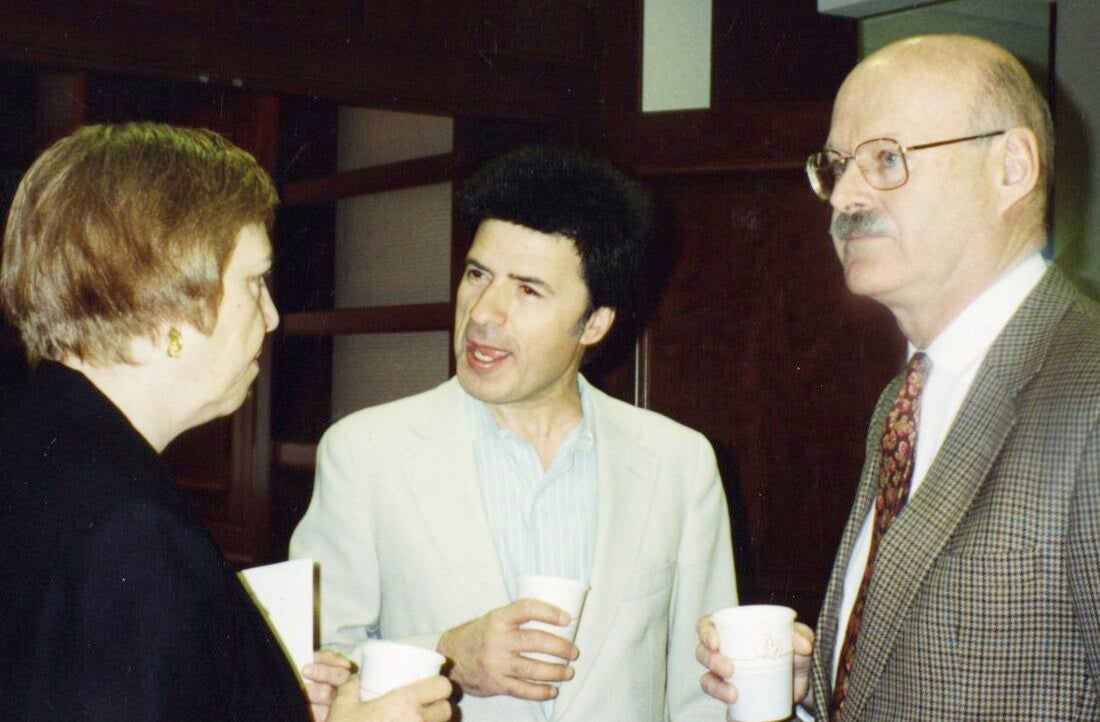
1977 – CCAS LAUNCHES M.A. IN ARAB STUDIES
Early faculty included Barbara Stowasser and Michael Hudson, pictured here with Arabic instructor Belcacem Baccouche (center), who was hired a year after MAAS was founded and became CCAS’s longest-serving professor.
A key part of what made the Center’s work so comprehensive in that first decade was the launch of the Master of Arts in Arab Studies (MAAS) in 1977, just two years after CCAS was founded. Designed to provide deep expertise in the politics, history, political economy, anthropology, languages, and cultures of the Arab world, MAAS quickly became the Center’s flagship program. Rigorous Arabic instruction was, and remains, at its core, reflecting one of the Center’s defining academic commitments: that serious study of the Arab world should be grounded in direct engagement with Arabic-language sources and forms of cultural expression rather than filtered only through English-language interpretation. The first MAAS cohort graduated in 1980, with its eight members going on to become professors and department chairs at Brown University and Birzeit University, a leader at Amnesty International, risk and finance consultants, and Deputy Prime Minister of the State of Palestine.
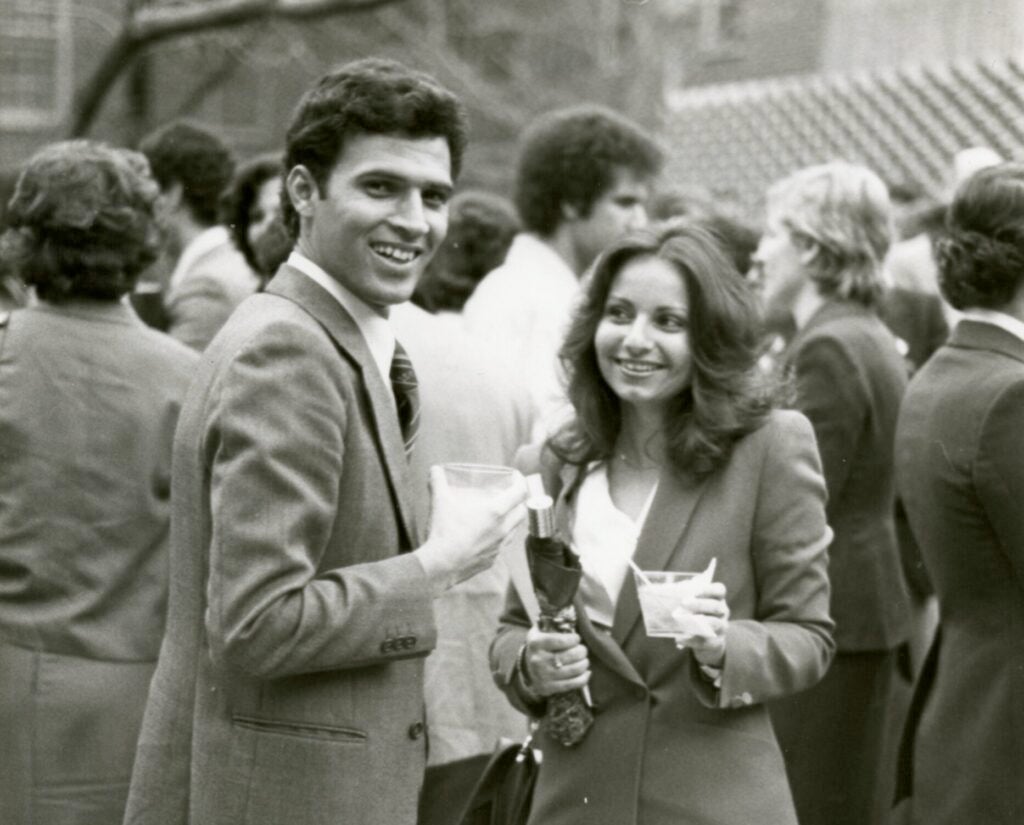
1980 – FIRST MAAS COHORT GRADUATES
Ziad Abou Amer, pictured withNadia Abourizk (MAAS ’85), was in the first cohort to graduate from MAAS and would go on to serve as Deputy Prime Minister of the State of Palestine.
With a graduate program in place and through generous donor support, CCAS entered a new phase of institutional growth in the early 1980s, endowing three faculty chairs that would strengthen both its teaching and its ties to the region: the Seif Ghobash Chair in Arab Studies, established through a gift from the United Arab Emirates in honor of the former Minister of State for Foreign Affairs; the Sheikh Sabah Al-Salim Al-Sabah Chair in Politics and Political Economy of the Arab World, named for the late Emir of Kuwait; and the Sultanate of Oman Chair in Arabic and Islamic Literature, presented by His Majesty Sultan Qaboos bin Said. The inaugural holders of these chairs were Michael Hudson, Hanna Batatu, and Irfan Shahîd, respectively, each of whom remained in their post until retirement. Together with the Clovis and Hala Salaam Maksoud Chair, established in 2007 to support a faculty member focused on human development research, these four professorships have continued to anchor scholarship and teaching at CCAS across generations.
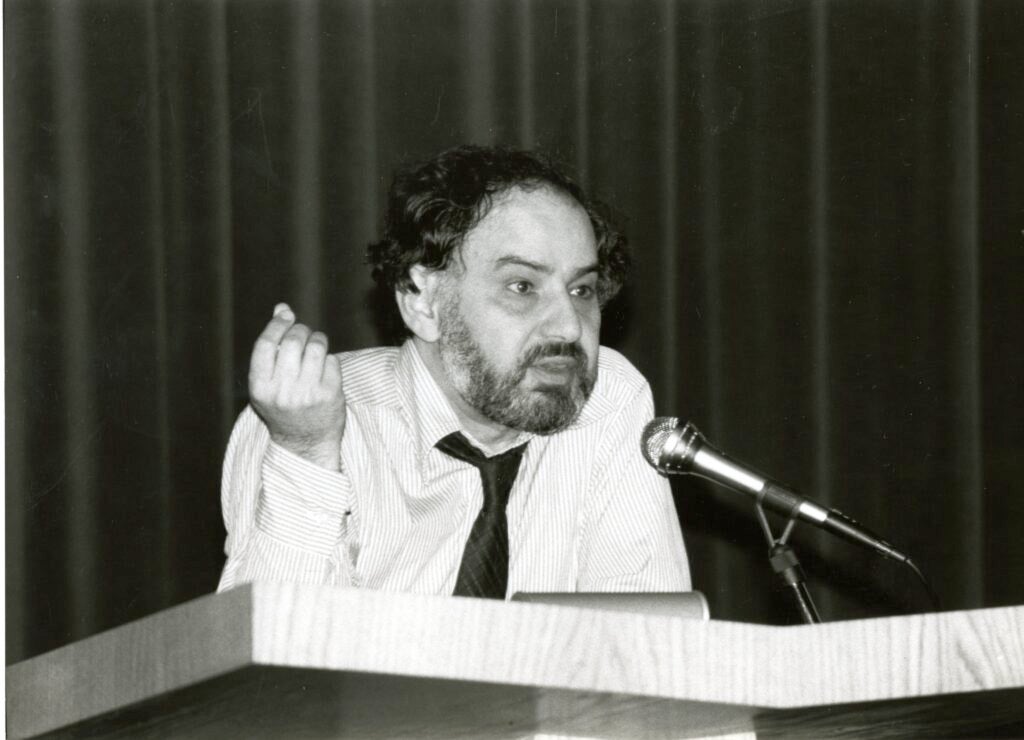
1985 – TALAL ASAD DELIVERS DISTINGUISHED LECTURE
His talk, “The Idea of an Anthropology of Islam,” became the foundation for his seminal paper, published under the same name by CCAS the following year.
CCAS quickly emerged in its early years as a bridge between academia and the public, with its lectures, symposia, and cultural events bringing together scholars of and from the Arab world and D.C. policymakers, ensuring that contemporary issues of the era were analyzed with deep contextual knowledge. That orientation was clear from the Center’s first symposium in 1976, on Arab-U.S. economic relations, which helped establish public programming as a core part of its mission. The Center also became an intellectual home to prominent Arab thinkers and sometimes a sounding board for their ideas. In 1976, Edward Said delivered his talk, “The Intellectual Origins of Orientalism,” the first of several he gave at Georgetown. It provided an early articulation of his foundational book, Orientalism, which MAAS students continue to read today. In 1985, Talal Asad delivered CCAS’s Annual Distinguished Lecture, “The Idea of an Anthropology of Islam,” presenting what would emerge as an influential critique of how Islam is studied in anthropology. His lecture was published the following year in CCAS’s long-running Occasional Paper series, becoming one of the Center’s most widely circulated publications. Nearly thirty years later, in 2014, Asad returned to CCAS to revisit his original lecture and seminal paper.
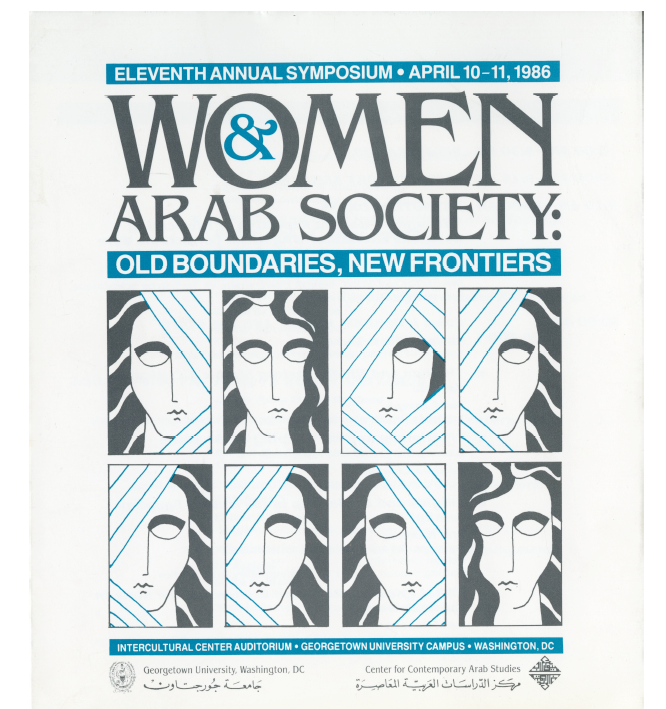
1986 – CCAS HOSTS SYMPOSIUM ON GENDER
CCAS’s lectures and symposia often anticipated issues and questions that would become central to the field of Arab studies, such as the study of women and gender in the Arab world.
Early programming at CCAS often anticipated emerging questions and developments that would later become central to the field. In 1986, with research at the intersection of gender and Arab studies still nascent, the Center hosted a symposium titled, “Women and Arab Society: Old Boundaries, New Frontiers.” It convened 24 renowned scholars, including CCAS Professors Barbara Stowasser, Judith Tucker, and Julie Peteet, to examine the forces shaping gender in Arab societies. Tucker noted afterwards in the CCAS Newsletter how striking it was to have a speaker roster of “virtually all women”—signifying a major shift from prior symposia at the Center that had featured predominantly male voices. A few years later, Tucker served as editor for the collected volume Arab Women: Old Boundaries, New Frontiers, which grew out of the conference and was published by Indiana University Press. The Center’s annual symposia regularly culminated in such collections edited by faculty and staff, many of which were published by CCAS directly.
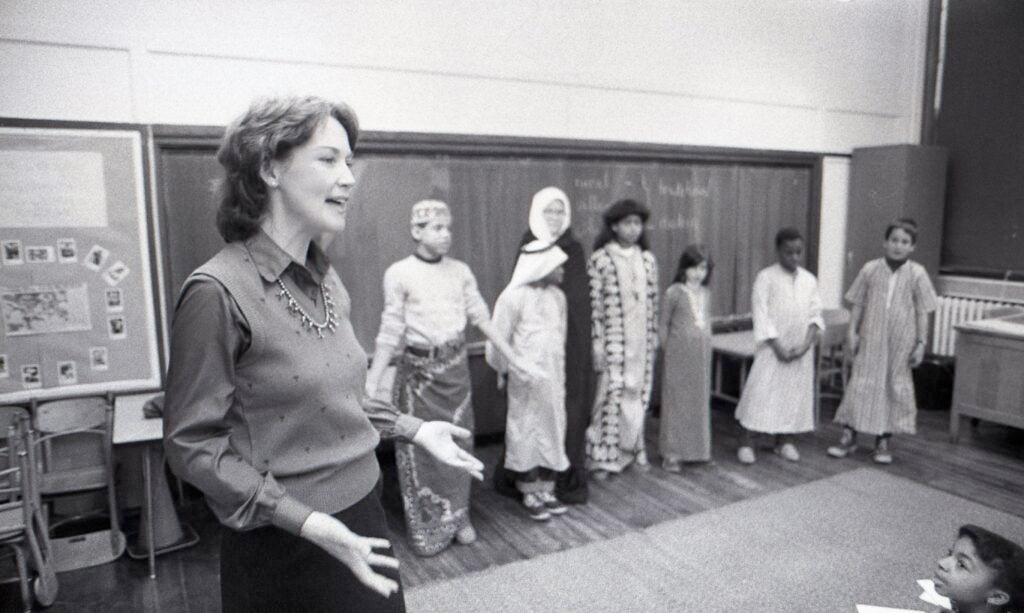
1983 CCAS LAUNCHES TEACHER OUTREACH
Nan Anthony, the first director of the Community Resource Service, speaks to an elementary class as part of the new program to help K-14 educators teach about the Middle East.
At the same time that the Center was advancing scholarship on the Arab world, it was also actively expanding its programming beyond the halls of academia. In 1983, CCAS launched the Community Resource Service, a signature initiative to help primary and secondary teachers bring more accurate, nuanced teaching about the Arab world into their classrooms. Renamed CCAS Education Outreach soon after, the program was coordinated in its early years by Nancy Burroughs, Nina Dodge, and Carole O’Leary, with essential contributions from Zeina Azzam, who later led the program for two decades. The program has reached thousands of K-12 teachers through its scholarship-based curriculum resources, as well as professional development and workshops, classroom presentations, study tours to the region, and—under the leadership of Susan Douglass, who followed Azzam as director—advocacy and support for educators navigating evolving state teaching standards. In 1997, the Department of Education awarded Georgetown a Title VI grant designating the university a National Resource Center on the Middle East and North Africa (NRC-MENA), which enabled the program to grow further. Beyond education outreach and other public programming, Title VI also supported critical language instruction and the expansion of Lauinger Library’s regional studies resources and Arabic-language holdings.
Students, too, helped shape the Center’s intellectual legacy. In the early 1990s, MAAS students founded the Arab Studies Journal (ASJ), with the first issue being published in 1993 and marking an important extension of the Center’s culture of research and debate. Over time, ASJ has grown into a respected independent venue for original interdisciplinary scholarship on the Arab world, while maintaining strong ties to the community from which it emerged.
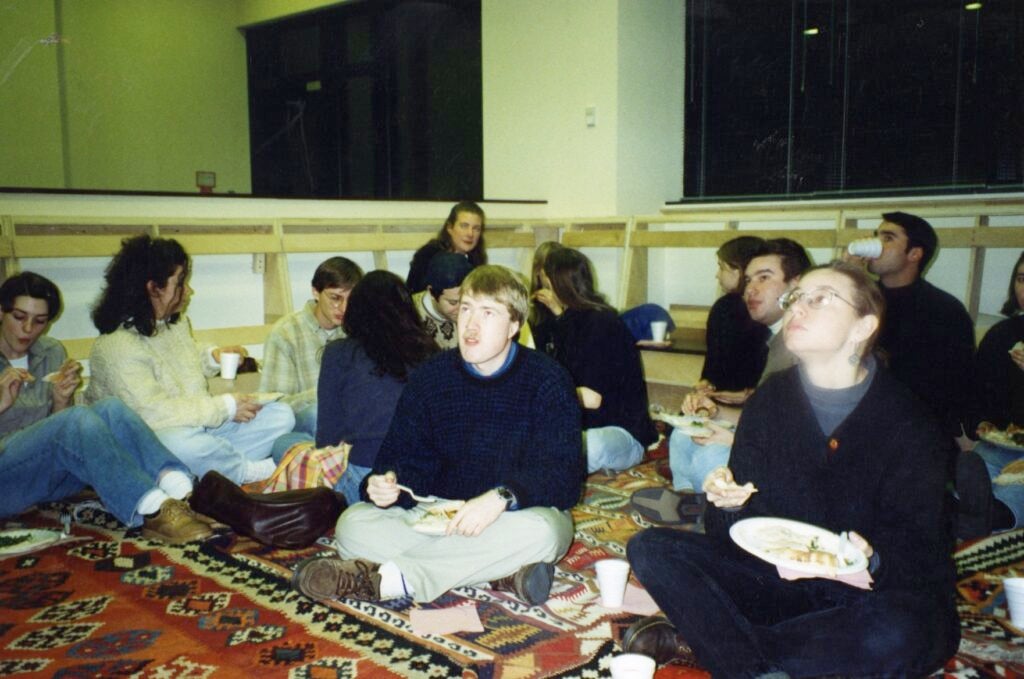
1995 – CCAS MOVES TO THE ICC
Even as the new ICC suite was still under construction, MAAS students were already enjoying their new gathering spot.
As CCAS approached the end of its teenage years, it was rapidly outgrowing its longtime space in the Walsh Memorial Building, and, in 1995, relocated to a newly constructed suite in the Edward B. Bunn Intercultural Center (ICC). The move, which marked a major milestone in the Center’s history, was made possible through donations through the CCAS Board of Advisors and a $2 million investment from Investcorp, an international investment firm founded by then-board chair Nemir Kirdar. The Center’s new diwan, with its kilim-upholstered benches and sunlit windows, quickly became a gathering place for students and community events, while the wood-paneled boardroom hosted lectures, discussions, and workshops for the larger public—making the new ICC suite a vital hub for intellectual exchange and public engagement.
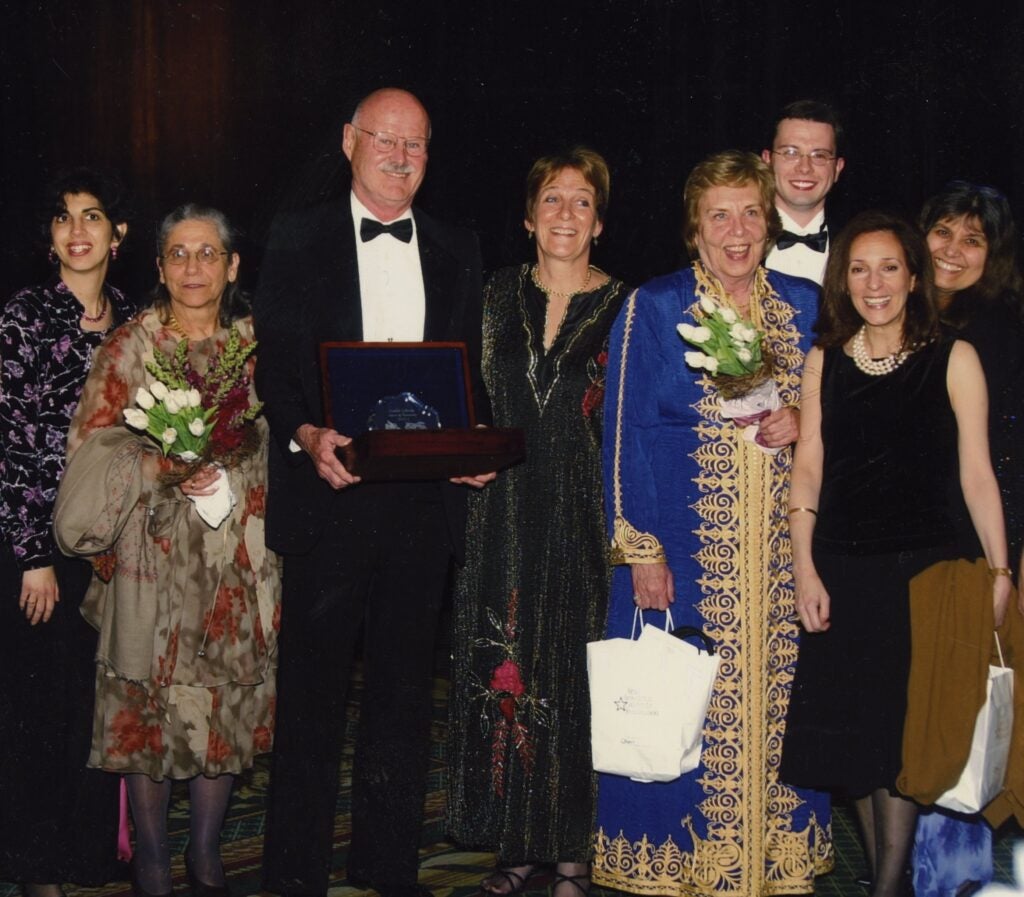
2005 – CCAS AWARDED SPIRIT OF HUMANITY
CCAS faculty accept the Kahlil Gibran Spirit of Humanity Award, which recognized the Center’s leadership in promoting understanding of the Arab world in the post-9/11 era when Arab and Muslim communities in the U.S. were often misrepresented.
In the years after September 11 and the U.S. invasion of Iraq, CCAS took on an even more visible public role. As interest in the region intensified, the Center expanded its lectures, panels, and symposia to provide historical and political context, challenge prejudice, and support more informed discussion of the Arab world and its diasporas. Applications to MAAS more than doubled, and education outreach programming became increasingly important as schools sought better resources for teaching about the region in accurate and balanced ways. That same public mission has also shaped the Center’s long-standing attention to Palestine, including its insistence on making space for Palestinian history, perspectives, and cultural life within academic and public conversations from which they were otherwise often minimized or excluded. In 2005, the Arab American Institute Foundation recognized the Center’s leadership in promoting understanding of the Arab world during this challenging period with the Kahlil Gibran Spirit of Humanity Award, which honors individuals and institutions whose work embodies Gibran’s legacy of bridging cultures and advocating for universal human values.
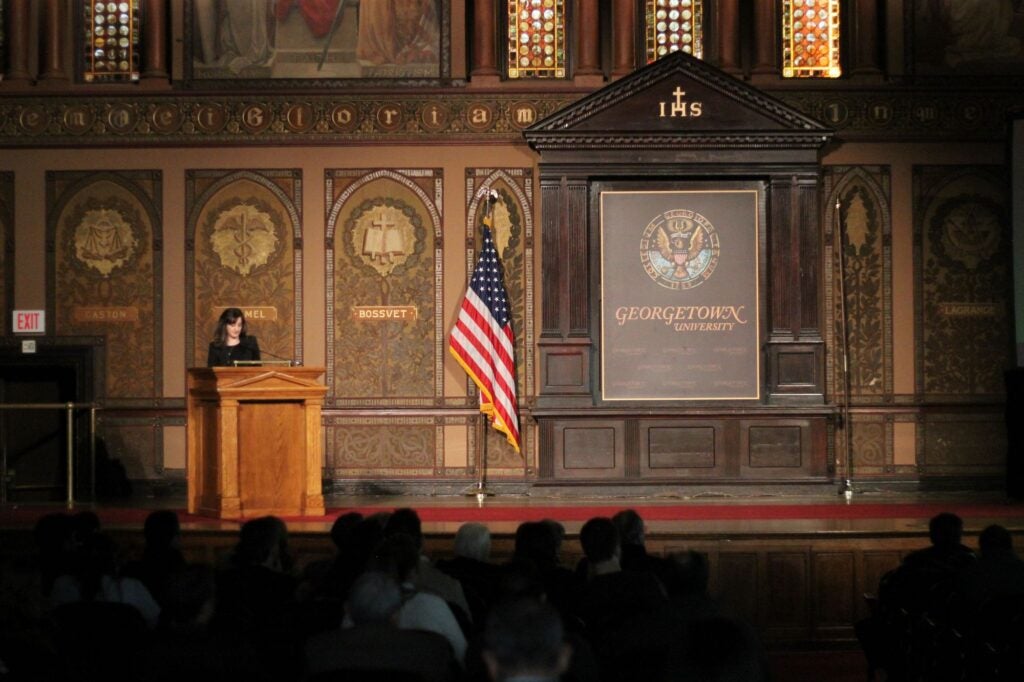
2012 – ADF FELLOWSHIP ESTABLISHED AT CCAS
Founded in partnership with the American Druze Foundation to support scholarship on the Druze, the program has brought eleven fellows to CCAS, including Reem Bailony, pictured here speaking in 2017 in Gaston Hall.
That period of heightened visibility also helped usher in a new phase of institutional growth and external partnerships. Two new postdoctoral programs, the Qatar Post-Doctoral Fellowship and the American Druze Foundation Fellowship—created with support from the Embassy of the State of Qatar and the American Druze Foundation, respectively—have expanded CCAS’s support for emerging scholarship. In 2024, the Middle East Studies Association of North America (MESA), the field’s leading professional association, moved its headquarters to CCAS, formalizing ties that had long existed between the Center and the broader field of Middle East studies. Three CCAS faculty members have served as MESA president—Michael Hudson, Barbara Stowasser, and Judith Tucker—and many others have contributed through board service, committee work, and conference participation.
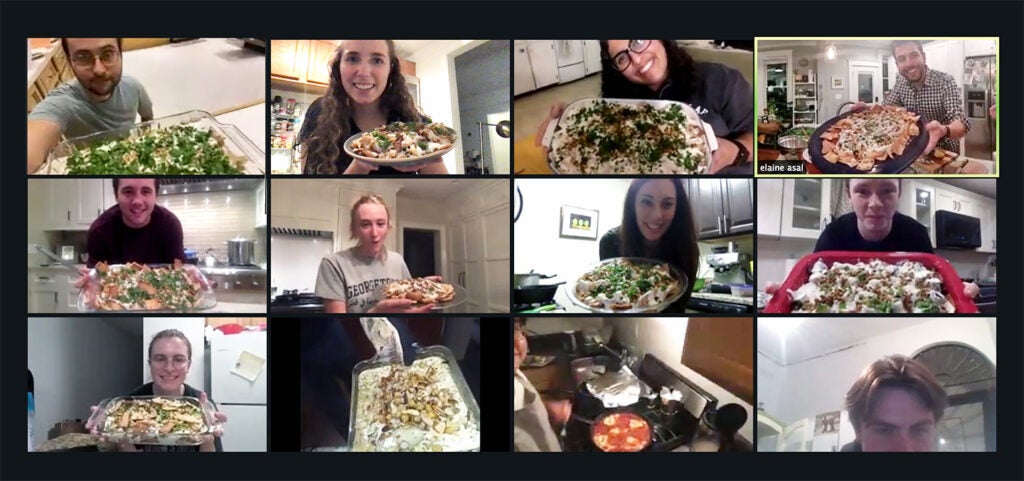
2020 – CCAS PIVOTS TO VIRTUAL LEARNING
As classes and events moved online during the COVID-19 pandemic, CCAS also hosted virtual community-building events, such as game nights and this cooking class led by MAAS student and chef Antonio Tahan.
Major developments in the region and across the globe have repeatedly underscored the vital importance of informed dialogue, and CCAS has continued to respond with the same combination of scholarship and public engagement that has defined its work from the beginning. During the Arab uprisings and their aftermath, CCAS convened scholars and practitioners to examine rapidly changing political realities. In the wake of the COVID-19 pandemic, the Center sustained both its public engagement and a strong sense of community through virtual programming, and has since continued to offer hybrid events in order to reach new audiences and highlight speakers from the region who might not be able to travel. Most recently, CCAS’s programming on Sudan and Gaza, and its support for K–14 educators teaching about these conflicts while addressing classroom bias and Islamophobia, demonstrate that the Center’s mission remains as critical as ever.
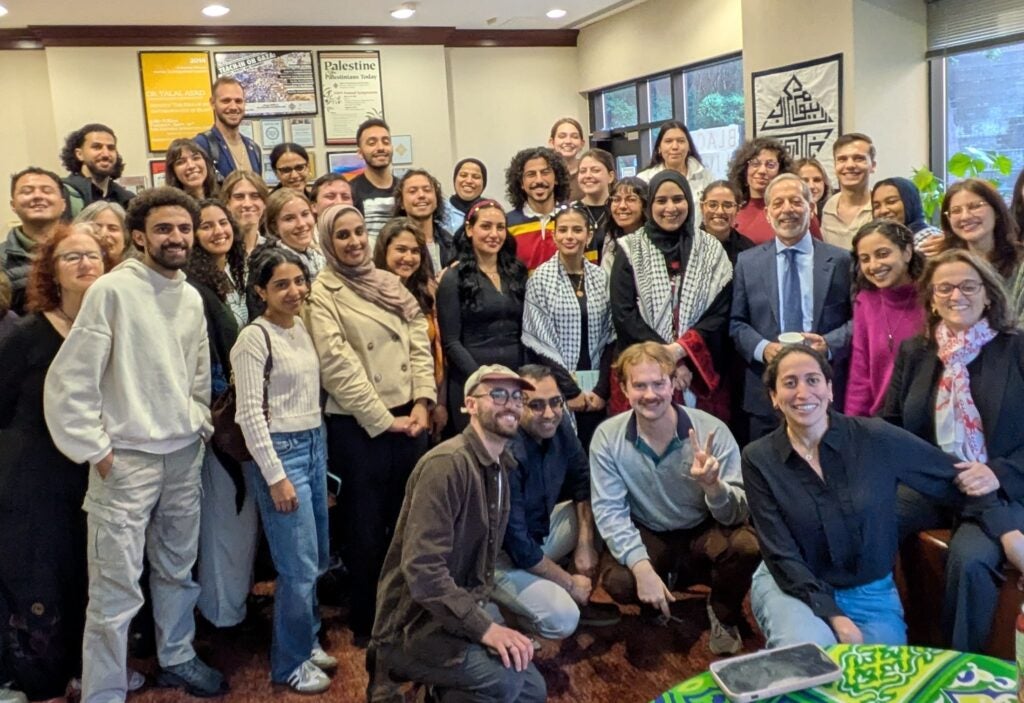
2025 – CCAS COMMUNITY AT 50
Students gather at a reception with 2025 Kareema Khoury Distinguished Lecturer Rashid Khalidi, reflecting the spirit of learning and community that continues to define CCAS in its 50th year.
Throughout its five decades, CCAS has built not only a distinguished record of scholarship and public engagement, but also a vibrant intellectual community. Perhaps the Center’s most lasting legacy can be seen in the work of its alumni, former fellows, faculty, and staff, who have shaped scholarship, public policy, journalism, education, and civic life in ways that extend far beyond Georgetown. To mark this anniversary, then, is not simply to celebrate an institution, but to honor the community that has built and sustained it—and continues to carry its work forward.
* Vicki Valosik is the Editorial Director at CCAS. This article builds on the extensive historical research conducted by the 50th anniversary archive team.