
From MAAS, Many Paths
A look at where five decades of MAAS graduates have gone
Since the launch of the M.A. in Arab Studies (MAAS) program in 1977, CCAS graduates have carried their training into a wide range of fields, going on to serve as ambassadors, authors, faculty at leading universities, congressional staff members, and leaders in media, human rights, development, and international finance. In the student-written profiles that follow, current MAAS students spotlight alumni from across five decades—beginning with a member of the program’s inaugural class—and pass along their reflections and advice for today’s students.
DECADE 1: 1975-1985
Curt Goering (MAAS ‘80)
Fighting at the Front Lines of Human Rights
By Kira Nygren
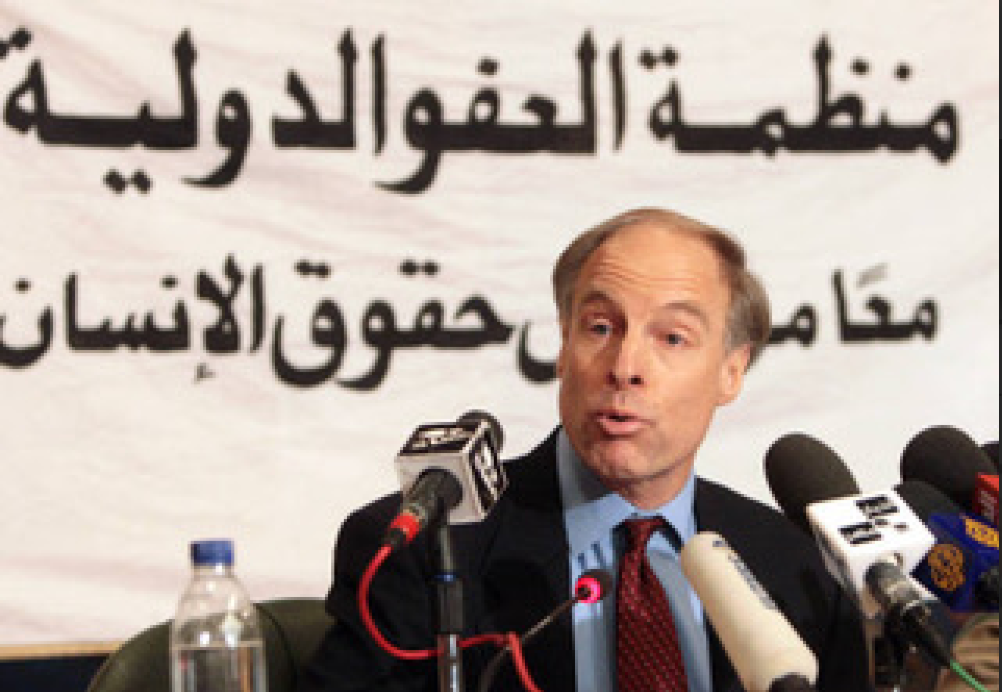
Curt Goering speaking at an
Amnesty International Press conference in Cairo
Having lived in East Jerusalem, studied at Bir Zeit University, and worked with an NGO relief and development agency in the Occupied Palestinian Territories, Curt Goering came to CCAS in the late 1970s with firsthand knowledge of the day-to-day realities of life under Israeli military occupation. At the Center, those experiences were paired with sustained study of the region’s history, literature, economics, and, as a defining requirement of the MAAS program, the Arabic language. After graduating as part of MAAS’s inaugural class in 1980, Goering ultimately returned to what had first drawn him to CCAS—his interest in human rights—dedicating the rest of his working life to the field.
Looking back on his time at CCAS during its formative years, Goering recalls the distinctive rapport that developed among students, instructors, and Center staff, as well as the presence and vision of preeminent academics, some of whose work Goering had already encountered at Bir Zeit. “Of course, contemporary issues of the time, such as the Camp David Accords, the Iranian revolution, the Grand Mosque seizure in Mecca, the Soviet invasion of Afghanistan, were all lively topics of discussion, both in the classroom and outside,” says Goering. These conversations were further enriched, he recalls, through guest lectures by politicians and diplomats—as well as activism on campus around these issues.
Directly after graduation, Goering joined Amnesty International USA as Advocacy Director for the Middle East and Europe programs, returning to work in the NGO space with “the benefit of a stronger academic grounding which CCAS provided.” He says that publishing a paper on the Bedouin in the Negev in the Journal of Palestine Studies, with Professor Sharabi’s support, gave him a “wonderful lift” of confidence to pursue a career in human rights at a time when it was not yet recognized as a legitimate academic discipline. Over 31 years at Amnesty, Goering served in both New York and London before later heading the UN Office of the High Commissioner for Human Rights in the Gaza Strip.
Goering’s long career in human rights ultimately led him to the role of Executive Director of the Center for Victims of Torture (CVT), the world’s largest organization devoted to the rehabilitation of torture survivors and victims of war. At CVT, he was confronted daily with the dark human capacity to inflict indescribable pain and cruelty, but also inspired by the determined resilience and quiet dignity of those rebuilding their lives after profound suffering. Now retired, Goering reflects on that work with an undiminished sense of urgency. “It is imperative that the next generation of human rights leaders and defenders, including those at CCAS now, redouble efforts to ensure that the promise of universal human rights for all finally becomes a reality for all the people of the world,” he says. “Our own security and well-being literally depend on it.”
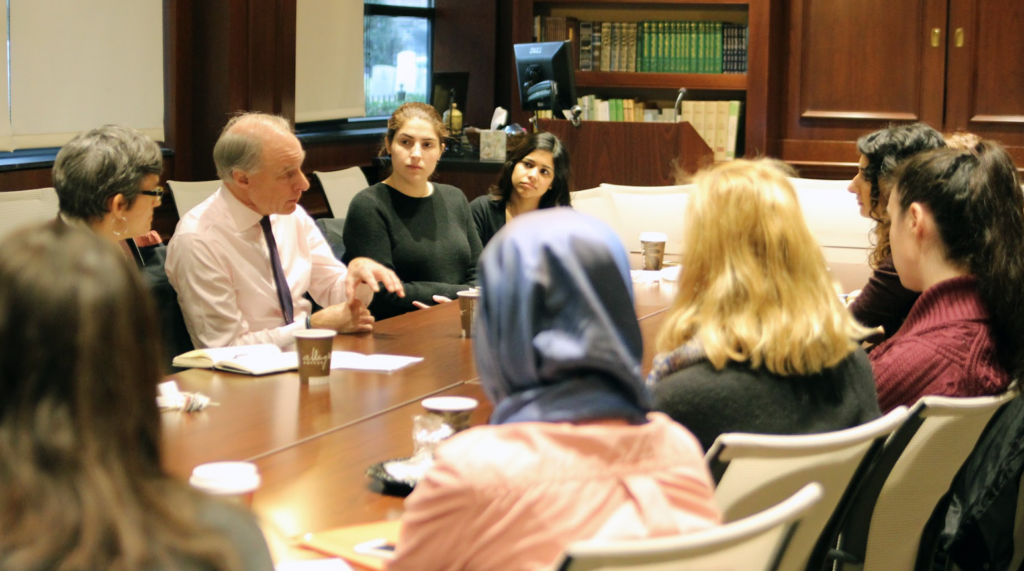
Curt Goering in 2017 speaking to current students in the MAAS program about his career in human rights
Barbara Batlouni (MAAS ‘83)
Building Connections Through Education
By Aimee Lister
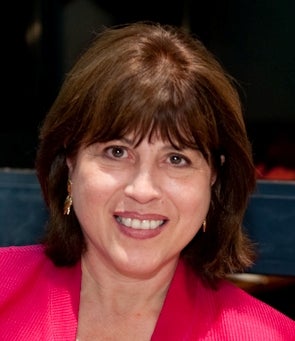
Barbara Batlouni
Barbara Batlouni is one of CCAS’s earliest alumni, having studied at the Center when it was still in its formative years. Drawn by the opportunity to study the Middle East’s contemporary issues through an interdisciplinary lens—rather than the medieval focus that dominated many programs at the time—she arrived in 1981 and quickly immersed herself in the Center’s vibrant intellectual community, keeping busy between her studies and working as Dr. Michael Hudson’s research assistant.
In the fall of Batlouni’s second year, renowned scholar Hanna Batatu joined the faculty shortly after the publication of his 800-page masterpiece, The Old Social Classes and the Revolutionary Movements of Iraq. Batlouni vividly remembers worrying about “how on earth [she] could produce any research papers worthy of his attention in a one-semester class”—a feeling that is still familiar to current students of the Center. A few weeks into the semester, the massacres at Sabra and Shatila camps happened, and when Batlouni and other students headed to a protest in front of the White House after Dr. Batatu’s class, he joined them without hesitation. She recalls how touched she was that such an outstanding scholar shared both their anger and commitment.
After leaving CCAS in 1983, Barbara Batlouni dedicated her career to the NGO sector, starting at the American-Arab Anti Discrimination Committee focusing on civil and human rights and community organizing. She then forged her path at AMIDEAST, a non-profit focused on strengthening US-MENA ties through the prism of education and training, becoming the director of AMIDEAST’s Lebanon office, where she worked for two decades until her retirement. Reflecting on her career, she cherishes the opportunities she had to work with Lebanese youth from across the country and watch program alumni channel their energy and idealism into becoming leaders in their respective fields.
When asked what advice she might have given to herself or to current students at CCAS, Batlouni had two thoughts to share: The first is simply to stay in touch and make the most of how empowering professional networking can be. And the second is to spend time in the region, in whatever form that might take. “Immersive experience and the knowledge and contacts you develop will enhance your understanding of the region,” says Batlouni, “whether your career is focused on government, corporate, media, or development roles.”
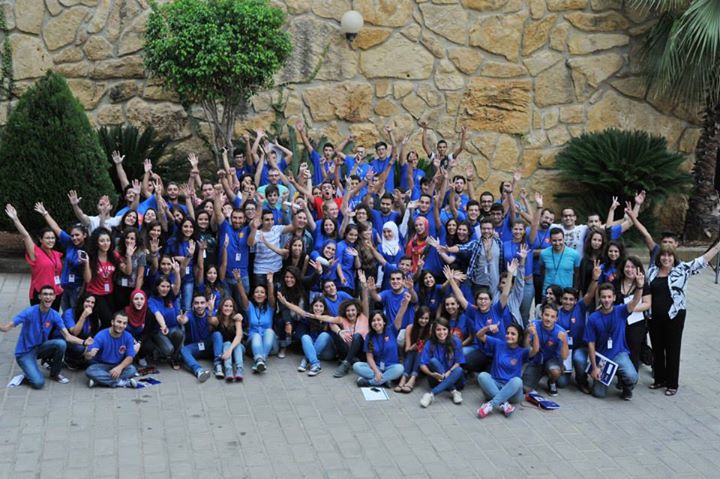
Barbara (on far right) at a retreat in 2014 with alumni of the YES (Kennedy-Lugar Youth Exchange & Study) program facilitated by AMIDEAST
DECADE 2: 1986-1995
Sinan Antoon (MAAS ‘95)
Literature Against Erasure
By Ahmed Saidam
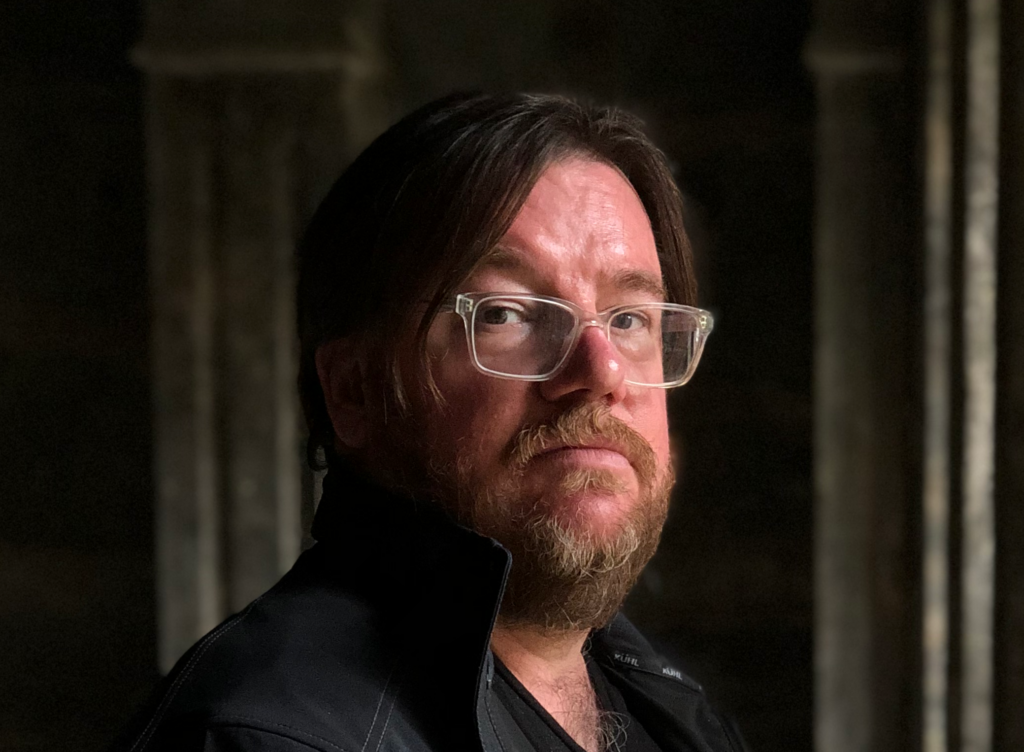
Sinan Antoon
When renowned Iraqi-American poet, novelist, scholar, and literary translator Sinan Antoon decided to enroll in the MAAS program, he says he was propelled by a desire to absorb knowledge of the culture and society of the Middle East. He had come to the U.S. after the 1991 Gulf War and was particularly drawn to the program at CCAS because of its acclaimed faculty, whose work had informed his evolving intellectual trajectory. “I was eager to learn from Hisham Sharabi, Halim Barakat, and Hanna Batatu, intellectuals and scholars whose work I had already read and admired while still in Iraq,” says Antoon.
Looking back, Antoon recalls a moment as a graduate student attending a seminar by Professor Batatu on the U.S./UN sanctions against Iraq and their catastrophic impact on Iraqi society. Batatu’s dedication, erudition, and modesty—demonstrated in the way he engaged analytically yet humanely with the subject—left a lasting impression. Moments like that nurtured in Antoon a sense of responsibility toward the region, and more specifically its peoples, which can be seen in his work today. For example, his fourth novel, The Book of Collateral Damage, published in 2019, portrays not only the human cost of the 2003-2011 Iraq war, but also the environmental toll—that of properties, places, objects, and even the small and unseen tolls that are often silenced.
In his writing, Antoon combines intellectual rigor with literary craft, complicating the ways history is narrated and memory is constructed. Now an associate professor at New York University and the author of five novels as well as multiple poetry collections and essays, he has built a body of work spanning scholarship, literature, translation, and criticism. “Literature mediates material reality. Its narratives and forms encode and emplot history,” he says. “It can and should haunt and trouble official histories and highlight and challenge the violence of archives.”
Yet Antoon’s intellectual and literary projects, which took shape during his time at CCAS and beyond, were not formed solely within the confines of the classroom. The innovative community he found at CCAS helped sustain his ideas, leading to projects such as the e-zine Jadaliyya, which he cofounded with other MAAS alumni.
When asked to share any advice for students today, Professor Antoon offered: “Make sure to master the language(s) and follow the debates in the region and on the ground. Be critical and vigilant vis-à-vis the politics of translation and the extractivist practices of cultural institutions.”
Lina Annab (MAAS ‘90)
Thoughtful Diplomacy in a Complex World
By Aimee Lister
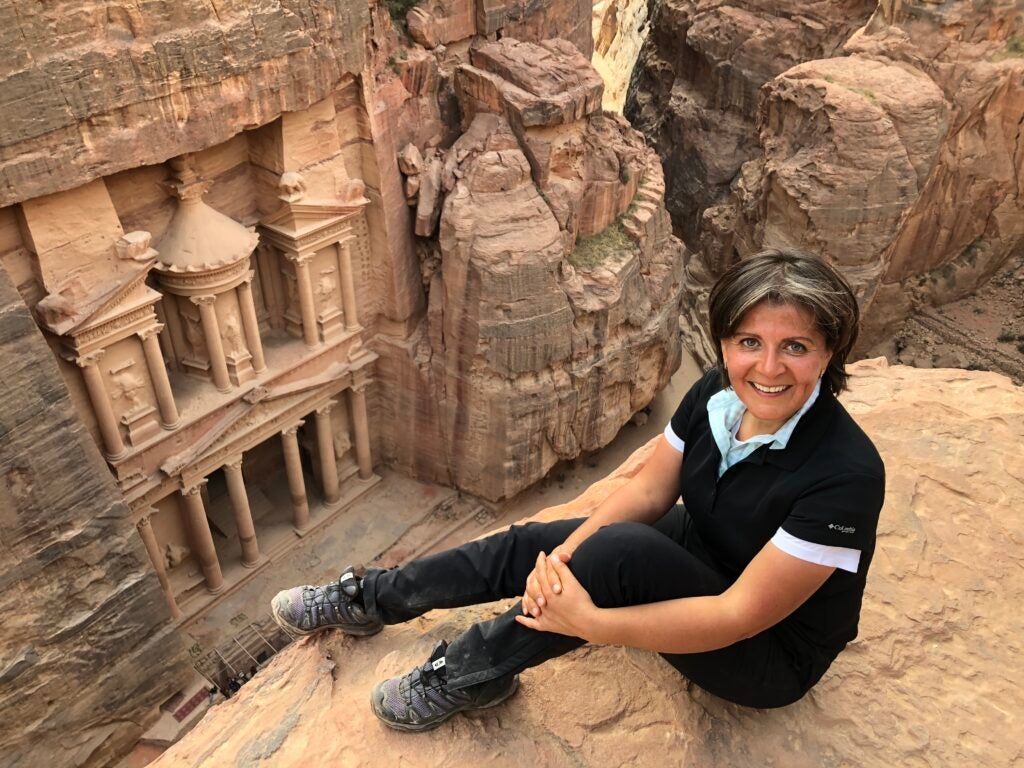
Ambassador Lina Annab,
who previously served as the
Jordanian Minister of Tourism and Antiquities,
in Petra, Jordan
When Ambassador Lina Annab came to CCAS as a graduate student in the late 1980s, it was still a relatively young institution, yet one she recalls already being “remarkably vibrant and influential.” It was also defined by a clear sense of purpose, Annab adds, noting that “the imprint of its founding generation”—such as scholars Hanna Batatu and Hisham Sharabi—could still be felt through the Center’s academic rigor and “culture of serious, methodologically grounded inquiry.”
As a Jordanian of Palestinian origin who had been exposed to the brutality of Israeli military occupation, Annab was drawn to the MAAS program because of its promise to explore the region “beyond stereotypes and simplifications,” an approach that became foundational to her experience at the Center and beyond. “The most enduring lesson I took from CCAS is the importance of depth and context, to understand before judging, and to resist simplistic explanations,” says Annab. “This discipline has stayed with me throughout my career, shaping how I approach public service, diplomacy, and policymaking with a commitment to thoughtful, informed, and grounded analysis.”
After graduating in 1990, Annab built an illustrious career across the private and public sectors. She has held positions at Citibank, Johnson & Johnson, and the International Monetary Fund, and served as General Manager of Zara Investment Company before moving to public service through an appointment as the Jordanian Minister of Tourism and Antiquities in 2016. What Annab considers “one of the most defining chapters” of her career, however, came in 2019 when she was appointed Jordan’s Ambassador to Japan. Annab says she found in Japan values she deeply recognized—humility, discipline, perseverance, and duty—and came to admire the country’s deliberate path to modernization, one that adapted outside influences while preserving its cultural core. The experience, she says, reinforced her belief in “the centrality of people-to-people diplomacy” and in the power of genuine human connection to bring societies closer together.
When asked what advice she would offer to MAAS students today, Annab urges us to remain curious, to stay connected to those who have shaped us, and to “recognize, consciously, the privilege of being part of such a remarkable academic community”; it is a gift, she notes, but one that carries responsibility. “You are being equipped to engage with a region too often misunderstood, use that understanding wisely, and contribute to a more thoughtful, just, and peaceful world.”
DECADE 3: 1996-2005
Adam Shapiro (MAAS ’97)
From CCAS to a Life in Solidarity
By Mohannad Shamy
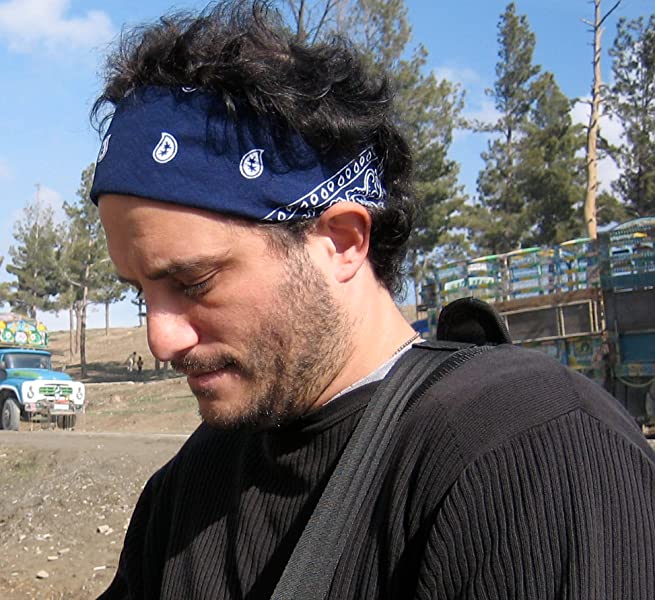
Adam Shapiro
Adam Shapiro’s interest in the Middle East began during his freshman year of college during the Gulf War, when people he knew were suddenly being deployed to a region they knew little about. A freshman in college at the time, he began taking classes to help him better understand the region—a decision that would quietly redirect the course of his life. Further inspired by a lecture from Edward Said during the Oslo Accords period, Shapiro knew by the time he graduated that he wanted to go deeper and decided to enroll in the MAAS program.
“The most influential thing about the program for me, honestly, was the people,” says Shapiro. Faculty like Halim Barakat, Hisham Sharabi, and Barbara Stowasser shaped his thinking both inside and outside the classroom, while Professor Barakat’s course on the Arab novel proved unexpectedly transformative. Reading Abdul Rahman Munif’s Cities of Salt and other works of literature, Shapiro found a new way into the region’s soul. “Learning about the layers of history and storytelling really affected how I thought about the region and the people,” he says.
After graduating, Shapiro dedicated himself to on-the-ground solidarity work in Palestine. In 2001, he co-founded the International Solidarity Movement, a Palestinian-led nonviolent direct-action movement, then channeled that same commitment into documentary filmmaking, producing About Baghdad, Darfur Diaries, and the Chronicles of a Refugee series, the latter drawing on over 250 interviews across 18 countries. Shapiro later served as Head of Communications at Front Line Defenders, Director of Advocacy for Israel and Palestine at Democracy for the Arab World Now (DAWN), and Deputy Director of Programs at Artists at Risk Connection, before taking his current role as Palestine Strategy Director at the American Friends Service Committee.
Through it all, Georgetown remained the foundation. “I went to two other graduate schools afterwards,” he says, “but neither were anywhere near as impactful as the time at Georgetown and CCAS.”
Nadine M. Cheaib (MAAS ‘05)
Storytelling Beyond the Headlines
By Rania Abu Taima
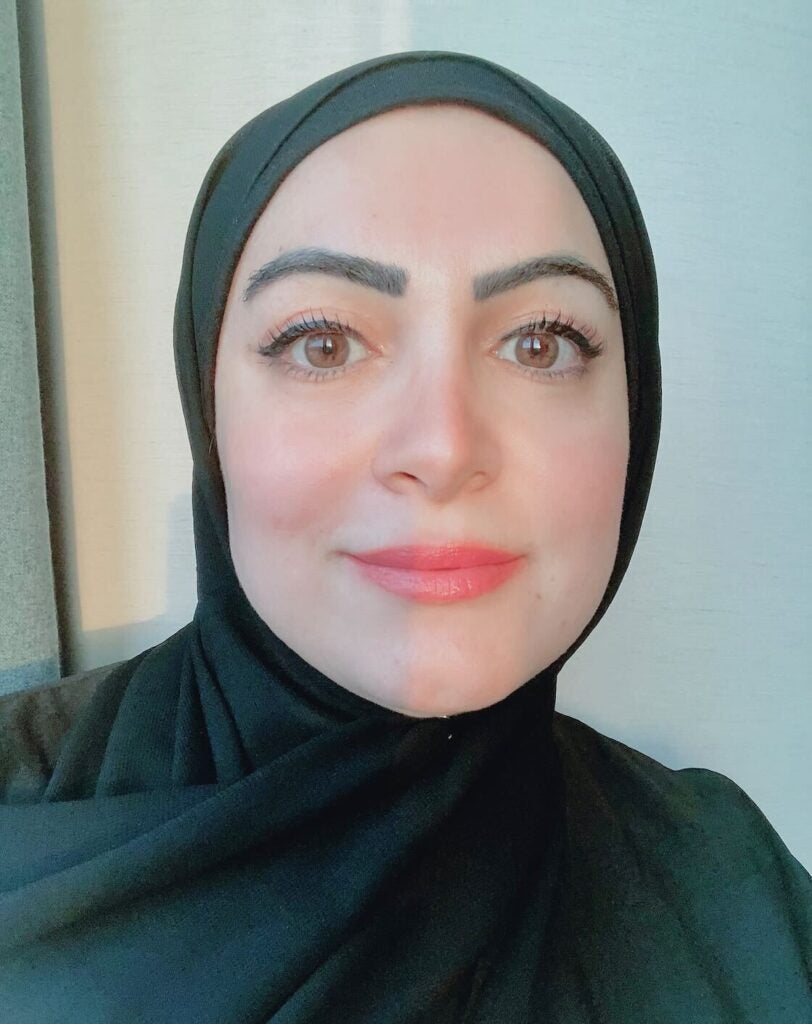
Nadine M. Cheaib
Too often, the Middle East is presented in ways that are simplified, rushed, and easy to move past. For Nadine Cheaib, that gap between how the region is represented and its realities became an important question—one that led her to Georgetown and ultimately to a career in journalism.
“I was drawn to MAAS,” says Cheaib, “because I wanted to understand the region beyond the headlines.” Coming to the program from Lebanon, Cheaib also brought her own perspective—one grounded in lived experience and in what it actually feels like to grow up within the ethos of a resistance movement, not just study it. In conversations with her advisor, the late Professor Michael Hudson, knowledge was not something simply delivered, but something built through dialogue and exchange. That understanding stayed with her and would later carry into her journalism career, where she has seen firsthand that “how the region is understood is not abstract; it has real-world consequences.”
After MAAS, Cheaib worked as a media specialist at Al Arabiyya, then as an archivist at Al Jazeera, where she found herself documenting history as it unfolded. “I was archiving field rushes sent by our teams on the ground while my brain was archiving historical events in real time,” she recalls. “It was surreal.” She credits this experience with sharpening her sense of how stories are built over time, a skill that would become invaluable in her later work as a content producer.
Now Instagram Lead at Al Jazeera, Cheaib works at the intersection of storytelling and digital media, shaping how complex global events are translated into narratives that reach and resonate with wide audiences. In that role, she thinks not only about what happened, but about who is being seen—and whether they are allowed to be seen as more than events, victims, or statistics. Sometimes, that means slowing things down—choosing the right voice, the right image, and the right moment—so that a story feels human and impactful rather than purely informational. “People do not connect to information; they connect to people,” she explains. “The work is not just about getting the facts right; it is about telling stories in a way that someone scrolling on their phone can actually feel and carry with them.” This kind of effort matters, she suggests, because the pieces shaped with such care are the ones that resonate—the ones that become “the work that stays with people, and the work that stays with you.”
DECADE 4: 2006-2015
Hoda Yousef (MAAS ’06)
The Making of a Historian
By Batoul Matar
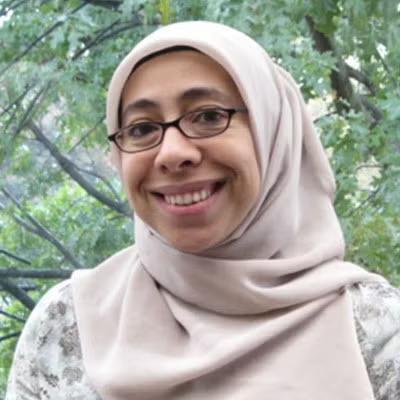
Hoda Yousef
Now an Associate Professor of Middle East History at Denison University, Hoda Yousef did not begin her career expecting to become an academic. Before joining the MAAS program, Yousef began her professional life in the corporate world after studying computer science as an undergraduate. Yet she found herself searching for work that felt more meaningful. In the context of the post-9/11 moment, and the intensifying rhetoric surrounding the Middle East, she turned toward Arab studies with the hope of contributing, in her own way, to a deeper and more nuanced understanding of the region. “As cliché as it sounds,” she reflects, “I hoped that I could make a difference by becoming an academic.”
At CCAS, Yousef found both intellectual direction and a sense of belonging. “It was my first real academic home,” she said, noting the lasting impact that mentorship from professors Judith Tucker, Fida Adely, John Voll, Ahmad Dallal, and Belkacem Baccouche had on her intellectual journey. Drawn to the MAAS program’s interdisciplinary nature, she explored courses across politics, anthropology, Islamic studies, and economics before discovering her passion for history. A pivotal moment came in the basement of Lauinger Library, where she encountered the nineteenth-century Egyptian journal Rawdat al-Madaris. “I remember finding the dusty tomes… and knowing instantly that this is what I wanted to work on,” she recalls. “That thrill of discovery is still something I chase to this day.”
Since completing her PhD in Georgetown’s History Department, she has built a distinguished academic career, including a previous appointment at Franklin & Marshall College. Her work explores intellectual and social histories of the modern Middle East, with a particular focus on literacy, gender, and feminist thought. Her first book, Composing Egypt (Stanford University Press, 2016), examines literacy practices at the turn of the twentieth century, and she is currently working on a second book, Feminist Retellings, which traces how feminist public thought was shaped through diverse media in early twentieth-century Egypt.
When asked to share any advice for current MAAS students, she offered: “Stay curious, forge relationships with those around you, get enough sleep.” More deeply, she encourages students to remain critically aware of their position within structures of knowledge and power. “Studying the Arab world is equal parts humbling and heartbreaking… I’ve found that humility has served me well in work and life.”
Grace Benton (MAAS ’14)
Defending Dignity Through Law
By Vicki Valosik
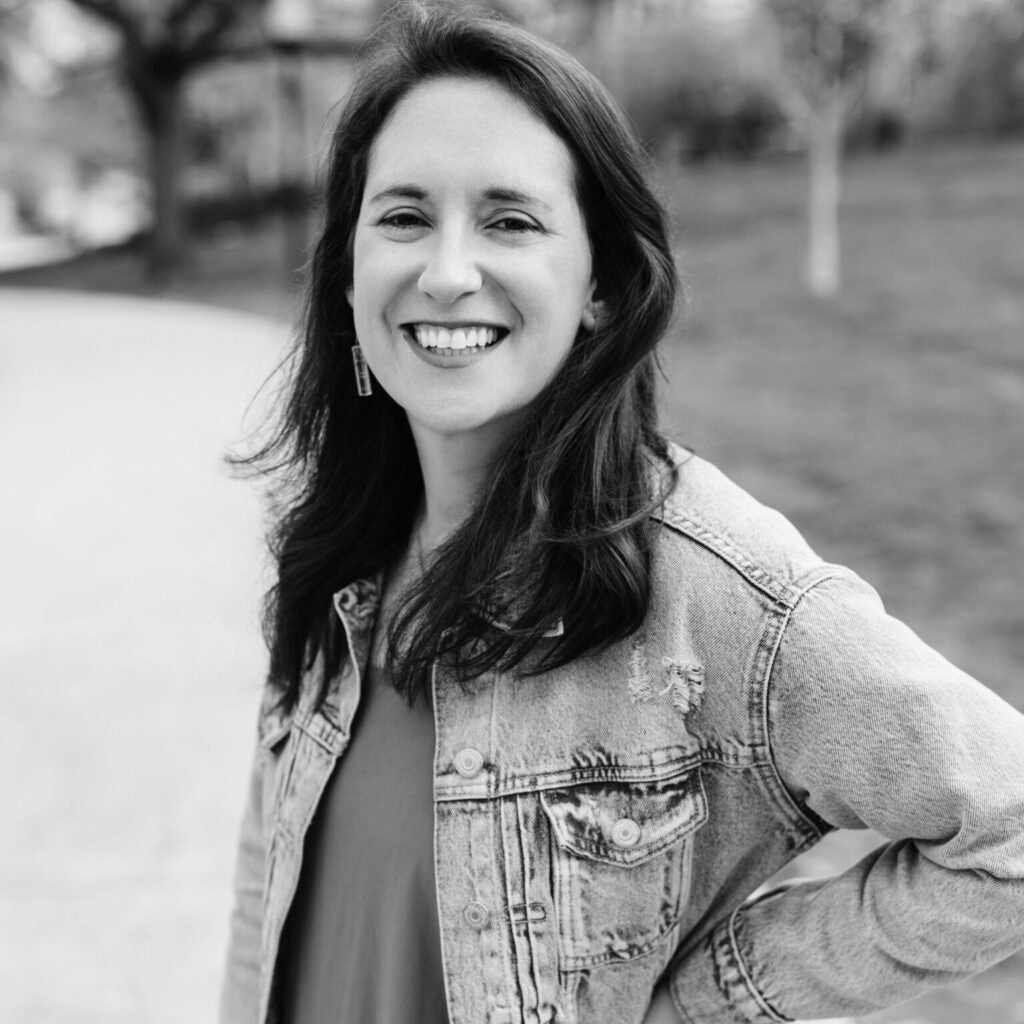
Grace Benton
Grace Benton has built her career, before and after MAAS, around working with people living through displacement. Now an immigration attorney in Northern Virginia who recently opened her own practice, Benton Immigration Legal Services, PLLC, she has spent more than a decade providing legal services for refugees and non-citizens—helping vulnerable populations living outside their home countries find greater dignity, stability, and protection. She also brings that work into the classroom as an adjunct professor at the University of Maryland, where she helps students connect the legal history of citizenship to the practical work of expanding access to it.
Benton arrived at the MAAS program in 2012, having just returned from a year in Jordan working on educational programming with Amman’s Sudanese community, and knew from the start that she wanted to focus her studies on issues surrounding migration and refugees. While at MAAS, Benton earned a Certificate in Refugee and Humanitarian Emergencies, served as a research assistant with Georgetown’s Institute for the Study of International Migration, and interned with the International Organization for Migration’s displacement monitoring program, processing field information and producing reports on displacement in Iraq. Benton also had the opportunity to travel with Professor Rochelle Davis to Jordan, where they designed and conducted participatory video projects with refugees in Amman. These firsthand experiences, combined with the regional expertise and Arabic language skills she developed at MAAS, would prove central to her later work.
After graduating from MAAS, Benton moved to Cairo to work at an NGO providing free legal aid to refugees. “The shock of moving from what often felt like the padded room of academia to a rapid-fire world of legal aid casework—all in Arabic, no less—was eye-opening,” she recalls. “Through this work, I learned that legal aid for refugees is essential to upholding basic refugee protections and human rights, but access to it was highly limited.” Convinced that legal training would equip her with stronger tools for her advocacy work, Benton enrolled at Georgetown Law in 2017, focusing on immigration and asylum law, and received her JD in 2020.
Since then, Benton has represented clients across a range of immigration matters, including asylum and removal proceedings, while also working with detained adults and unaccompanied immigrant children. She says that her training at MAAS fundamentally shaped how she approaches her work. “I learned to question assumptions about charged concepts like vulnerability and belonging that pervade how we think about immigrants in the United States,” says Benton. “MAAS also instilled the importance of meaningfully examining my own positionality within larger systems of power. That perspective continues to guide my work daily, pushing me to challenge and disrupt the power imbalances in legal services and to harness legal knowledge to build power within immigrant communities.” At a moment when these issues feel especially urgent, Benton has also found ways to extend that work through her teaching, with her course culminating in a student-led naturalization workshop for community members applying for U.S. citizenship.
Reflecting on her own path, Benton’s advice to current MAAS students is to “say yes to everything—within reason,” and to remain open to opportunities outside one’s “standard intellectual circuit.” Often, she suggests, that is where the most valuable connections and possibilities begin.
DECADE 5: 2016-2025
Alaa Mufleh (MAAS ‘18)
Grounding Policy in Lived Experience
By Gabriela Saba
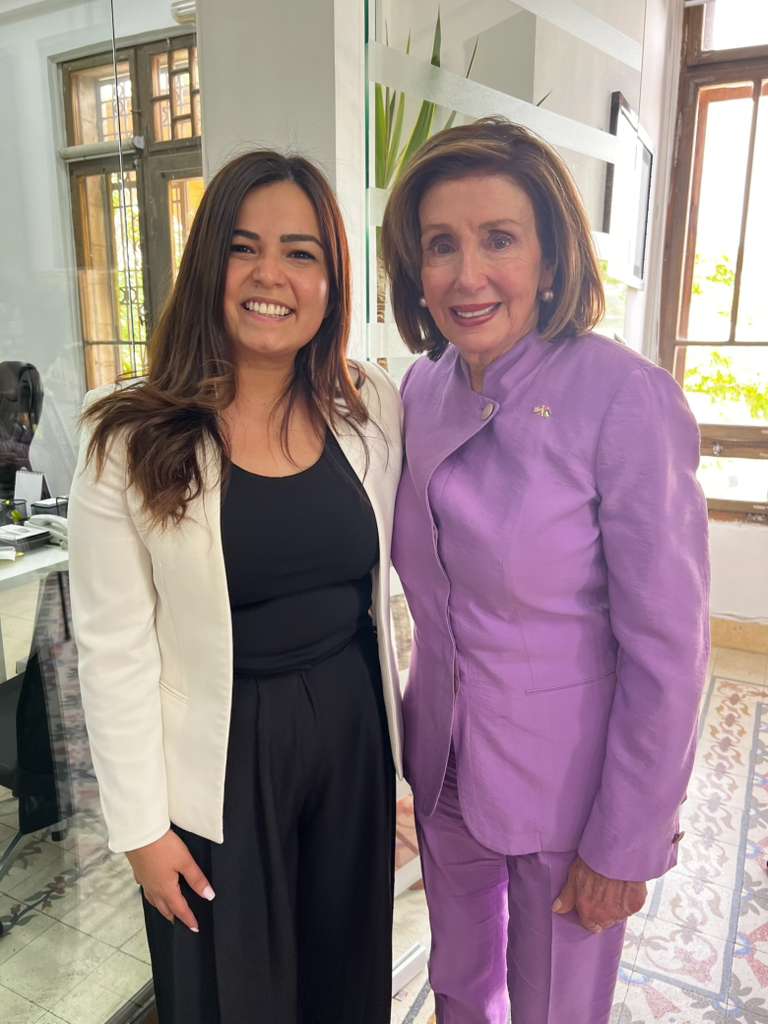
Alaa Mufleh with then-
Speaker of the U.S. House of Representatives Nancy Pelosi
Alaa Mufleh arrived at MAAS with what she describes as “a quiet discomfort” she could not ignore—a sense that the Arab world she knew through lived experience did not fully align with how it was represented in academic and policy spaces. Looking back, she says MAAS became “an invitation to be stretched, undone, and rebuilt,” teaching her to pay attention to what lies beneath the surface. That shift, she says, has shaped how she approaches policy, programming, and strategy.
After graduating from MAAS, Mufleh began her career in Washington, D.C., working on public diplomacy, strategic communications, and social inclusion programming with embassies, multilateral initiatives, and global development groups. Across these roles, she focused on how institutions shape people’s opportunities—and how policy and programming can become more responsive to lived realities. She later returned to her home country of Jordan, where she worked at the Jordan Entrepreneurship and Innovation Association and the West Asia-North Africa Institute before joining the U.S. Embassy in Amman as Lead Advisor on Emerging Voices and Preventing/Countering Violent Extremism. There, she helped design integrated national programming for youth, including rehabilitation and reintegration initiatives for formerly incarcerated individuals that combined mental health support, vocational training, entrepreneurship, and language education.
Today, Mufleh serves as a Regional Advisor to the Middle East and North Africa at the International Development Research Centre, where she focuses on strategic positioning, regional intelligence, and institutional responses to evolving political and economic dynamics. Reflecting on her work, she notes that her most meaningful moments have often been the least visible. “Real change rarely begins at the level of policy alone,” she says. “It begins in whether someone feels seen, heard, and able to imagine something different for themselves.”
To current MAAS students, Alaa offers this reminder: “Be patient with your own becoming. It is easy to move into abstraction, especially in academic and professional spaces. But the work we do ultimately touches real lives. Let that ground you and keep your work honest.”
Caroline Zullo (MAAS ’20)
From Humanitarian Work to Diplomatic Service
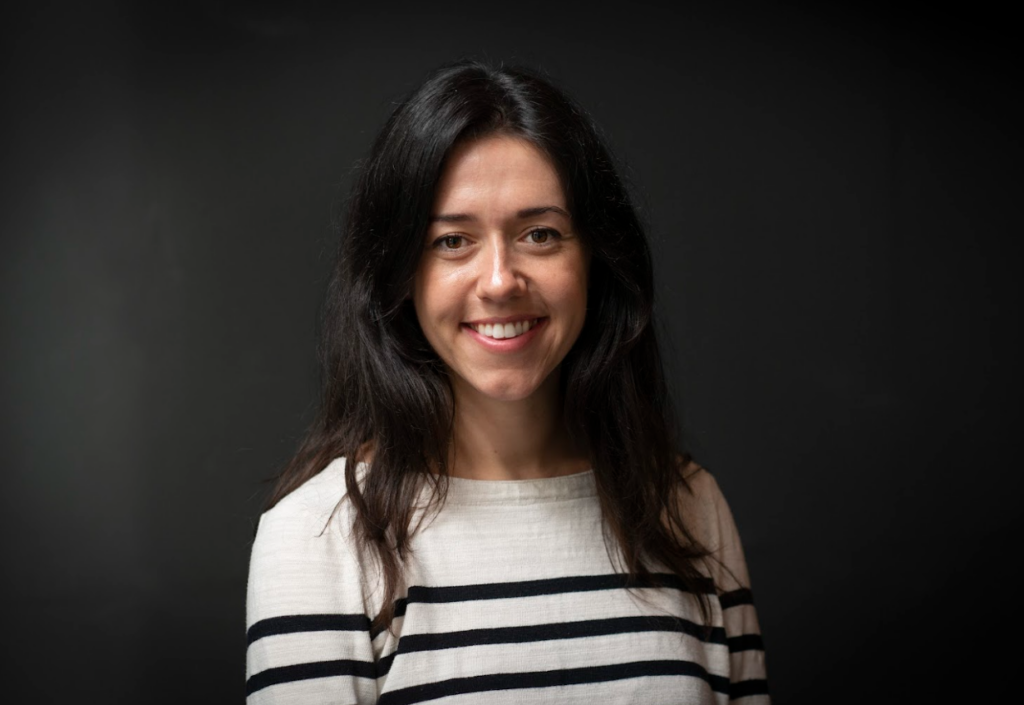
Caroline Zullo
Caroline Zullo began her career in the Middle East shortly after completing her undergraduate degree in Political Science and Middle East Studies, moving to East Jerusalem to teach English at Palestinian high schools. She later returned to Washington, DC, where she worked at the Carnegie Endowment for International Peace, focusing on Palestinian and Libyan political dynamics, before resuming her regional engagement in Amman. There, she taught history at a Jordanian school while volunteering with displaced communities at the Zaatari refugee camp—an experience that shaped her long-term focus on refugee and displacement issues.
In the MAAS program, Zullo was a recipient of the Foreign Language and Area Studies (FLAS) Fellowship both years of her studies, enabling her to combine rigorous academic training with practical experience. Her work included internships with the International Rescue Committee and Mercy Corps in Washington, DC, as well as with the American University of Beirut and the Danish Refugee Council in Lebanon during the summer between academic years. Her studies further deepened her regional expertise and language proficiency in Arabic and Kurdish, and she earned a certificate in Refugees, Migration, and Humanitarian Emergencies.
After graduating from MAAS, Zullo continued her work on displacement issues with international organizations in Jordan and Iraq, contributing to humanitarian policy and advocacy both in the field and in Washington, DC. Drawing on this experience, she later pursued a career in the U.S. Foreign Service as a political officer and is currently serving her first tour in Baghdad. In this role, she conducts daily visa interviews with Iraqi applicants, using her Arabic language skills and regional expertise to engage directly with individuals from across the country.
Zullo credits her time at Georgetown with providing the analytical foundation, critical perspective, and language proficiency that shape her professional approach. Her training at CCAS continues to inform her work, supporting thoughtful engagement and a sustained commitment to understanding and incorporating local perspectives in her day-to-day responsibilities.