
CCAS Prof. Killian Clarke publishes a new book on counterrevolutions
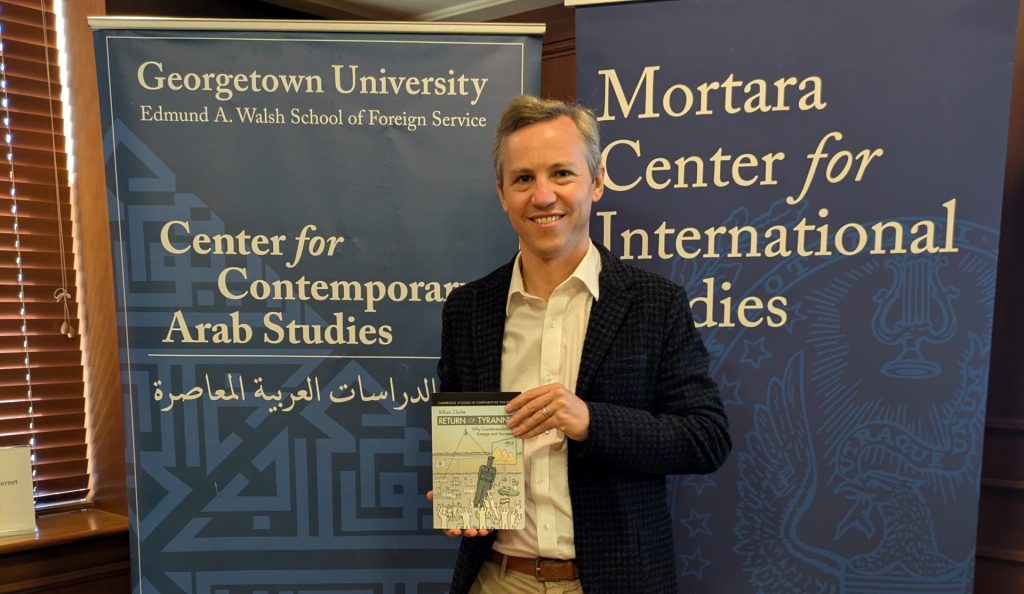
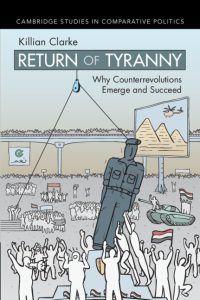
Congratulations to CCAS Assistant Professor Killian Clarke on the publication of his first book, Return of Tyranny: Why Counterrevolutions Emerge and Succeed (Cambridge University Press, 2025). Clarke’s book addresses a question that has long challenged scholars of revolutions, regime change, and democratization: why some revolutionary governments are able to consolidate and maintain power while others are eventually overturned. Drawing on an original cross-national dataset of counterrevolutions since 1900 and extensive fieldwork in Egypt, Clarke traces how the strategies of revolutionary movements—both before and after coming to power—shape their vulnerability to counterrevolutionary forces.
Return of Tyranny argues that the fate of a revolutionary government depends not only on whether counterrevolutionary challenges emerge, but on how new leaders manage the complexities of governing after the fall of an old regime. Clarke shows that post-revolutionary governments must balance three demanding constituencies—remnants of the former regime, elites within the revolutionary coalition, and popular forces in society. How leaders navigate this “trilemma,” maintain unity among their allies, and preserve the political leverage generated during the revolution plays a decisive role in determining whether counterrevolutionary efforts gain traction. These dynamics, he suggests, help explain why some revolutionary governments stabilize while others fracture. They also shed light on broader debates over nonviolent resistance, democratization, and authoritarian resurgence.
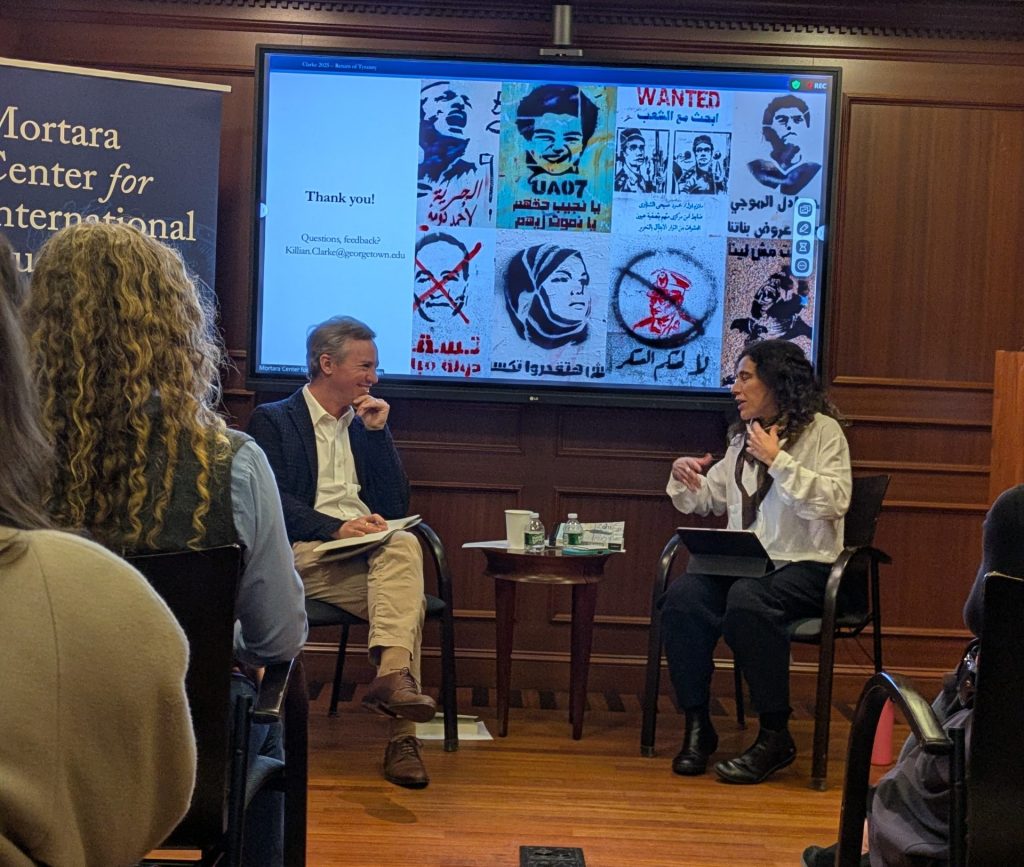
Egypt forms a central case study in Clarke’s book, both because its 2011 revolution and 2013 counterrevolution represent one of the most prominent recent incidences of counterrevolution and because the country offers unusually rich empirical material. Clarke’s research draws on approximately one hundred interviews with Egyptian political figures and activists, as well as a dataset of more than 7,000 protest events. His analysis shows how shifts among political elites, the role of the military, and patterns of popular mobilization shaped the opportunities that ultimately enabled Egypt’s counterrevolution to succeed.
Clarke joined the CCAS faculty in 2021 and has published widely on revolutions, protests, and political transitions. Return of Tyranny builds on his doctoral research at Princeton University and many years of subsequent work, offering a new framework for understanding the forces that shape whether revolutionary governments endure or succumb to counterrevolutionary challenges. Clarke presented his findings at a book launch event hosted this October by the Mortara Center for International Studies in partnership with CCAS.